
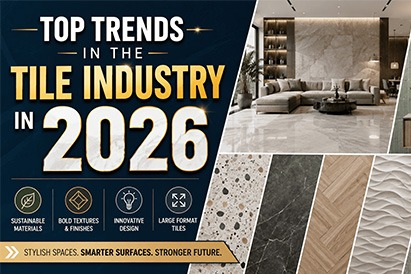
The tile industry is evolving rapidly in 2026, driven by changing design preferences, advanced manufacturing technologies, sustainability, and increasing demand for premium surfaces. Tiles are no longer used only for basic flooring and walls. Today, they play an important role in defining the style, comfort, and functionality of residential and commercial spaces.
For manufacturers, exporters, dealers, architects, and interior designers, understanding the latest tile trends is essential for staying competitive and meeting customer expectations.
1. Large-Format Tiles and Slabs
Large-format tiles and porcelain slabs continue to gain popularity in 2026. Larger sizes create a seamless and spacious appearance by reducing the number of grout lines. They are increasingly being used for floors, walls, countertops, bathrooms, kitchen surfaces, and feature walls.
Sizes such as 1200 × 2400 mm and larger formats are becoming popular in premium residential and commercial projects.
2. Natural Stone and Marble Effects
Natural stone-inspired designs remain one of the strongest trends in the tile industry. Marble, travertine, limestone, and other stone effects are being reproduced with highly realistic digital printing technology.
These tiles provide the luxurious appearance of natural stone while offering advantages such as durability, easier maintenance, and consistent quality. Warm beige, cream, earthy tones, and dramatic marble veining are especially popular.
3. Advanced Digital Printing Technology
Digital printing continues to transform tile manufacturing. Modern technology allows manufacturers to create highly detailed designs that replicate marble, wood, concrete, stone, and other natural materials.
Improved printing and glazing techniques are also helping manufacturers develop more realistic textures, patterns, and finishes. This allows tile brands to offer innovative collections while maintaining consistent production quality.
4. Textured and 3D Surfaces
Texture is becoming an important part of tile design in 2026. Embossed patterns, ridges, grooves, relief designs, and three-dimensional surfaces can add depth and character to interiors.
Textured tiles are particularly suitable for feature walls, bathrooms, hospitality spaces, restaurants, and luxury residential projects. They create visual interest while offering a more tactile experience.
5. Nature-Inspired Colours
Consumers are increasingly interested in interiors that feel calm and connected to nature. As a result, earthy and organic colours are becoming more popular.
Shades such as beige, sand, terracotta, olive green, moss, brown, and soft grey are being incorporated into modern tile collections. These colours work well with natural textures and minimalist interior designs.
6. Sustainable Tile Manufacturing
Sustainability is becoming an important focus across the tile industry. Manufacturers are exploring ways to reduce energy consumption, improve production efficiency, use recycled materials, and reduce environmental impact.
Sustainable manufacturing is increasingly important for international buyers, architects, developers, and customers who consider environmental performance when selecting building materials.
7. Matte and Natural Finishes
While glossy tiles remain popular, matte, honed, and soft-touch finishes are gaining attention. These finishes provide a sophisticated and natural appearance and work particularly well with stone, concrete, and minimalist designs.
For outdoor and high-traffic applications, performance characteristics such as durability and slip resistance also remain important considerations.
8. Outdoor and Indoor-Outdoor Tiles
The demand for outdoor living spaces is influencing tile design. Porcelain tiles and outdoor pavers are increasingly being used for balconies, terraces, patios, pool areas, gardens, restaurants, and hospitality projects.
Matching indoor and outdoor tile collections can create a continuous visual appearance and help connect interior spaces with outdoor environments.
9. Digital Visualization and Smart Technology
Technology is changing how customers select tiles. Digital catalogues, 3D room visualization, AI-powered visualization, QR codes, and virtual showrooms allow customers to see how different tiles may look in a real environment before making a purchase.
For tile manufacturers and dealers, these tools can improve customer engagement, reduce confusion, and create a more interactive buying experience.
Conclusion
The tile industry in 2026 is moving toward a combination of design innovation, technology, sustainability, and functionality. Large-format surfaces, natural stone effects, textured finishes, earthy colours, sustainable manufacturing, outdoor applications, and digital visualization are shaping the future of the industry.
Tile businesses that understand these trends and adapt their products and customer experience accordingly can discover new opportunities in both domestic and international markets. The future of tiles is not just about creating beautiful surfaces—it is about combining aesthetics, performance, innovation, and technology to meet the changing needs of modern customers.
